

How To Preserve Old Books?
Old books are more than just printed words on paper; they are windows into the past, carriers of history, culture, and knowledge. Learning how to preserve old books is essential not only for maintaining their monetary value but also for safeguarding their historical significance for future generations. This comprehensive guide will assist you in preserving the authenticity and worth of your old books, and ensure your treasured volumes remain in pristine condition for generations to come.
Understanding the Vulnerabilities of Old Books
Old books are vulnerable to several environmental factors that can cause deterioration over time. UV light can cause irreversible damage by breaking down the chemical structure of paper and ink, leading to fading and brittleness. Even artificial light can contribute to the slow degradation of your books if exposure is prolonged. Humidity fluctuations can lead to mold growth and warping, while fluctuations in temperature can cause the materials in the book, such as paper and leather, to expand and contract, leading to warping and cracking over time.
Understanding these vulnerabilities is the first step toward effective preservation.
Proper Storage Techniques
Storing old books correctly is vital to their preservation.
- Old books should be kept upright on shelves with sufficient support to avoid leaning, which can stress the binding. If the book is too large to stand upright, it should be stored flat.
- Using acid-free materials such as storage boxes and interleaving paper can help protect against yellowing and acid migration. Acid-free paper is particularly important because it prevents the slow acidification of book pages, which can cause them to become brittle and discolored over time.
- Maintaining a stable environment with consistent temperature and humidity levels is key. Excessive dryness can make pages brittle, while high humidity might encourage the growth of mold and mildew. Ideally, books should be stored in an environment where the temperature is between 65-70°F and humidity is kept around 40-50%.
Cleaning and Maintenance
Cleaning old books requires a gentle touch.
- Regular dusting with a microfiber cloth or a soft brush can remove surface dirt, while special attention should be paid to areas where dust tends to accumulate, such as the spine and page edges. Dusting not only keeps the books clean but also prevents the buildup of particles that could cause abrasion over time.
- For minor stains, a dry cleaning sponge or eraser can be used, but it’s essential to avoid using any liquid or abrasive cleaners that could damage the paper or cover. Stains caused by oils or organic matter should be treated with great caution, as inappropriate cleaning methods could exacerbate the damage.
Handling with Care
Proper handling is crucial in preserving old books.
- Always wash and dry your hands before touching any vintage book to avoid transferring oils and dirt to the pages. Over time, the grime and oils on your hands can do serious harm. The natural oils from your hands can transfer to the pages, causing discoloration and, in some cases, attracting pests.
- If the book is particularly valuable or fragile, consider wearing cotton gloves. Gloves can provide an extra layer of protection, particularly when handling books with delicate pages or covers.
- When reading or displaying the book, support the spine and avoid opening it too wide, as this can strain the binding and cause cracks. Opening a book too wide can also lead to spine breaks, especially in older volumes where the binding has become fragile.

Special Considerations for Old and Delicate Books
Rare and fragile books require additional care. For example, leather-bound books may benefit from periodic conditioning with a specialized leather preservative to prevent drying and cracking. Custom protective covers or cases can provide an extra layer of protection against dust, light, and handling damage, ensuring that these precious volumes remain intact for years to come. Leather-bound books, in particular, are susceptible to drying out and cracking, so they should be treated with a leather conditioner designed specifically for historical books.
Take into account covering really valuable books with insurance. Insurance can assist in paying for the restoration expenses or the book’s worth in the event of unintentional damage or loss. For high-value books, this can provide peace of mind and financial security. Lastly, cataloging helps maintain an extensive record of your collection, complete with images and condition reports. Both personal records and insurance purposes can benefit from this, offering a clear record of the book’s condition and value over time.
Long-Term Preservation Solutions
For books that are already showing signs of deterioration, professional preservation methods may be necessary. Techniques such as deacidification can neutralize the acids in paper that cause it to become brittle, while binding repairs can restore a book’s structural integrity.
These methods are best performed by professionals who specialize in book conservation, ensuring that the process is done safely and effectively.
Integrating Antique Collections Into Your Home
Old books can be more than just stored away; they can also serve as beautiful, functional décor. For instance, “Six Mois en Orient en 1851 et 1852” by M. J. Bottu de Limas is one of the many leather-bound treasures in the library that would benefit from being displayed on a protected shelf, ensuring its longevity while adding historical charm to your living space..
Similarly, “One Hundred Illustrations to the Arabian Nights” a rare book by Stanley L. Wood, is a stunning example of a book that deserves a special place, perhaps in a glass display case, to protect its intricate illustrations and binding.
Lastly, the signed 1st edition of “Pèlerinage à la Mecque et à Médine” by Dr. Soubhy Saleh is a unique piece that, with proper care, can be both a visual centerpiece and a well-preserved literary artifact.
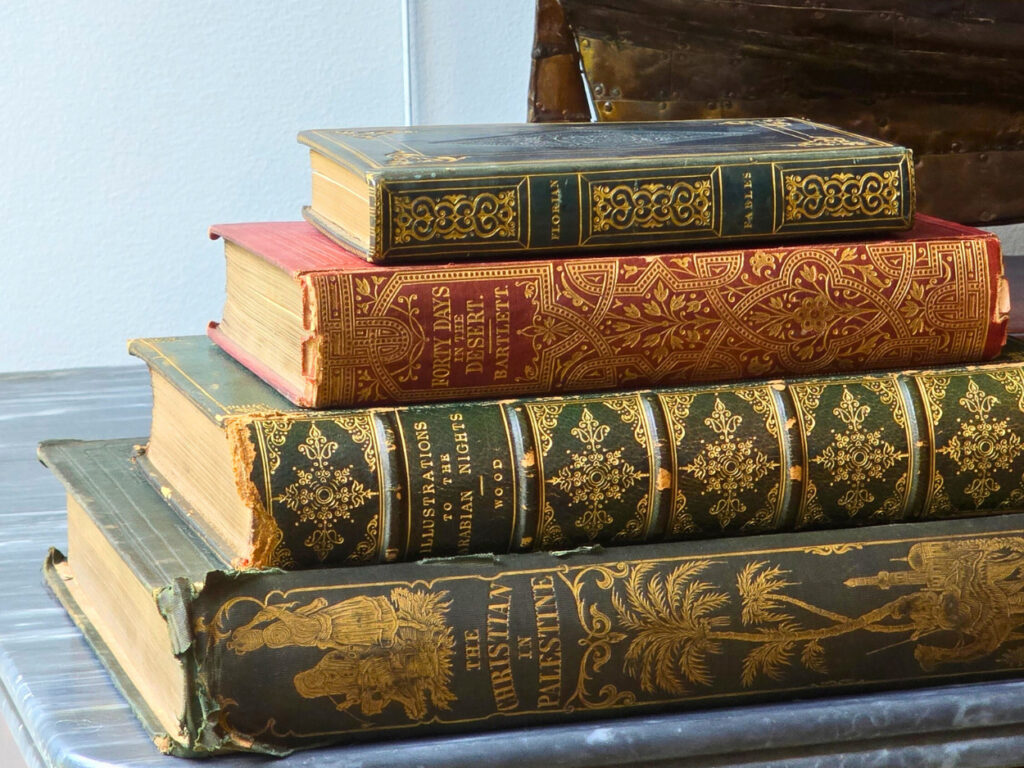
Preserving old books requires attention, care, and sometimes professional help, but the rewards are immense. By following the tips outlined above, you can ensure that your literary treasures remain intact and continue to be enjoyed for generations to come. Whether you’re storing them away or displaying them proudly in your home, proper preservation is key to maintaining both their physical condition and their historical significance.
